
Table of Contents
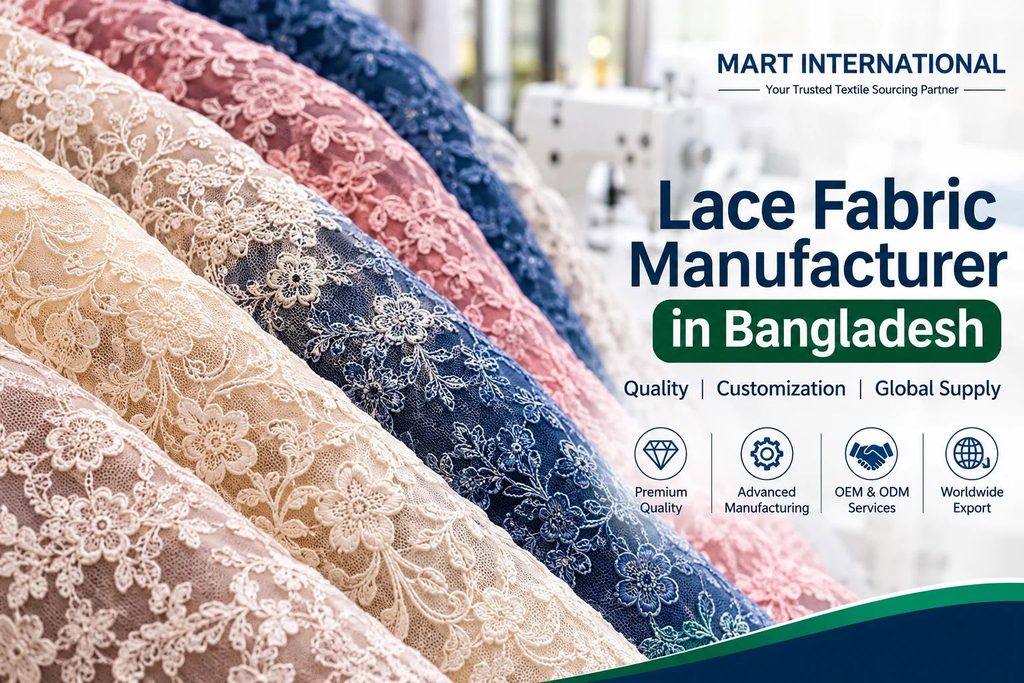
The global fashion and garment industry depends on high-quality fabrics to create distinctive, attractive and durable clothing. Among the many textile materials available, lace fabrics hold a special position because of their intricate patterns, decorative details and versatility. From bridal gowns and evening dresses to luxury apparel and fashion accessories, lace adds texture, elegance and character to different types of garments. Choosing the right Lace Fabric Manufacturer in Bangladesh is therefore an important decision for garment manufacturers, fashion brands, wholesalers and international buyers.
A reliable manufacturer does more than supply attractive fabric. It helps businesses maintain consistent quality, develop customized designs, manage production requirements and meet delivery expectations. Buyers must consider several factors before selecting a textile supplier, including manufacturing technology, raw material quality, customization capabilities, inspection procedures and export support.
Bangladesh has an established textile and ready-made garment industry, making it an important destination for international textile sourcing. Among the businesses serving this industry, MART INTERNATIONAL focuses on Schiff Lace, Allover Embroidery and other textile products for commercial buyers.
Whether you are a garment manufacturer looking for wholesale lace fabric, a fashion brand developing a new collection or an importer searching for a dependable textile sourcing partner, understanding the manufacturing process and supplier evaluation criteria can help you make better purchasing decisions.
This guide explores different lace fabric types, manufacturing techniques, quality requirements, wholesale sourcing considerations and the factors that matter when choosing a textile manufacturing partner in Bangladesh.
Understanding the Lace Fabric Industry
Lace is a decorative textile characterized by open spaces, intricate patterns and interconnected threads. Depending on its construction, lace can feature floral arrangements, geometric shapes, ornamental borders and detailed embroidery patterns.
Unlike ordinary woven fabrics, which generally create a continuous surface through interlacing warp and weft yarns, lace constructions can incorporate openwork patterns and decorative structures. Manufacturers use different techniques, including embroidery, knitting, weaving and other specialized processes, to create different lace varieties.
The appearance and performance of lace depend on several factors:
- Raw materials: Cotton, polyester, nylon, viscose and other suitable fibers influence texture, appearance and performance.
- Manufacturing techniques: Different machinery and production methods create different patterns and fabric structures.
- Thread quality: Thread strength, consistency and composition affect the appearance and durability of the finished material.
- Design complexity: Intricate patterns require appropriate production techniques and careful machine settings.
- Finishing: Dyeing, washing, cutting and other finishing treatments influence the final appearance and usability.
Lace fabrics serve both decorative and functional purposes. Some varieties create lightweight overlays for dresses, while others provide structured decorative elements for bridalwear, lingerie and premium fashion garments.
For garment manufacturers, selecting suitable lace is not simply an aesthetic decision. The material must also meet the technical requirements of the finished product.
For example, a bridalwear manufacturer may prioritize intricate patterns, elegant finishing and dimensional details. A women’s apparel manufacturer may prioritize softness, flexibility, color consistency and ease of sewing.
Understanding these differences helps buyers select materials that match their product requirements.
Why Bangladesh Is an Important Destination for Textile Sourcing
Bangladesh has developed a substantial textile and ready-made garment manufacturing ecosystem over several decades. Its export-oriented apparel industry supports a broad supply chain involving fabric production, garment manufacturing, accessories, finishing, packaging and international trade.
According to the Bangladesh Garment Manufacturers and Exporters Association (BGMEA), Bangladesh recorded approximately USD 39.35 billion in ready-made garment exports during fiscal year 2024–2025. This demonstrates the scale of its established apparel export sector.
For international buyers, this industrial ecosystem creates opportunities to connect with textile suppliers, garment manufacturers and sourcing businesses.
An Established Garment Manufacturing Industry
Bangladesh has extensive experience in producing garments for international markets. Its manufacturing ecosystem serves different apparel categories, including knitwear, woven clothing, casualwear, fashion apparel and specialized garments.
This creates demand for different textile materials, including decorative fabrics, embroidered textiles, lace materials and garment accessories.
Access to Textile Sourcing Partners
International buyers often need more than a fabric supplier. They may require assistance with product selection, sample development, custom designs, production coordination and shipment arrangements.
Working with a knowledgeable textile sourcing partner can simplify these activities by providing a coordinated point of communication.
Production and Quality Considerations
A supplier’s production capabilities should always match the buyer’s requirements.
Before placing a bulk order, businesses should evaluate:
- Available manufacturing technology.
- Raw material sourcing arrangements.
- Production planning.
- Quality inspection procedures.
- Customization capabilities.
- Order management.
- Shipping and documentation support.
Opportunities for International Buyers
Bangladesh can be considered for sourcing a variety of textile products. However, buyers should evaluate individual suppliers rather than assume that every company offers the same manufacturing capabilities.
The right sourcing partner should understand the intended garment application, provide clear product specifications and communicate production requirements transparently.
For businesses looking for a Lace Fabric Supplier in Bangladesh, these considerations are particularly important when purchasing customized or decorative textiles.
Different Types of Lace Fabrics Available in the Market
Lace is a broad textile category that includes different constructions, patterns, materials and applications. Understanding the characteristics of each type helps buyers select suitable products for their collections.
1. Schiff Lace Fabric
Schiffli embroidery is a specialized machine embroidery technique used to create decorative textile patterns.
The name Schiffli comes from the Swiss word associated with a small boat, referring to the shuttle mechanism used in the traditional embroidery machine.
Schiffli embroidery uses needle and shuttle threads to form stitches. The process allows manufacturers to produce detailed designs across fabric surfaces or on suitable base materials.
Depending on the production method and design, Schiffli embroidery can create:
- Floral patterns.
- Geometric arrangements.
- Decorative motifs.
- Eyelet designs.
- Intricate ornamental patterns.
- Embroidered lace structures.
One of the most recognizable characteristics of Schiffli embroidery is its ability to produce detailed patterns with dimensional visual effects.
Manufacturers can create different designs by adjusting embroidery patterns, stitch arrangements, thread selection and base materials.
Common applications include:
- Bridal dresses.
- Evening gowns.
- Women’s fashion.
- Decorative apparel.
- Lingerie.
- Premium clothing collections.
- Fashion accessories.
When sourcing Schiffli Lace, buyers should evaluate embroidery consistency, thread quality, pattern accuracy, fabric stability and finishing.
2. Allover Embroidery Fabric
Allover Embroidery refers to embroidered designs distributed across a substantial portion of the fabric surface.
Unlike embroidery that appears only along a border or in a small decorative area, allover designs create a more continuous visual pattern.
Manufacturers can develop different patterns depending on the intended application and fabric construction.
Common design possibilities include:
- Floral embroidery.
- Repeated geometric patterns.
- Decorative motifs.
- Dense embroidery arrangements.
- Lightweight embroidered patterns.
- Multicolor decorative designs.
Allover Embroidery fabrics are popular in fashion because they provide visual detail without requiring separate decorative elements for every garment.
Common applications include:
- Women’s dresses.
- Bridalwear.
- Eveningwear.
- Fashion tops.
- Traditional clothing.
- Premium apparel.
- Decorative garment panels.
When selecting an Allover Embroidery Fabric Manufacturer, buyers should examine pattern distribution, stitch density, fabric weight, thread performance and overall consistency.
3. Bridal Lace Fabric
Bridal lace is widely used in wedding dresses and other special-occasion garments.
Its appearance can range from delicate floral patterns to elaborate embroidered structures with intricate decorative details.
Depending on the design, bridal lace may feature:
- Floral motifs.
- Scalloped edges.
- Embroidered patterns.
- Decorative net structures.
- Three-dimensional elements.
- Beaded or embellished details.
Bridalwear manufacturers often select lace based on its appearance, drape, texture, transparency and compatibility with lining materials.
For example, a lightweight floral lace may be suitable for sleeves or overlays, while a more structured design may work better for decorative bodice panels.
4. Lace Appliques
Lace appliques are decorative lace pieces that can be attached to garments to enhance their appearance.
They are commonly used when designers want to add specific patterns or decorative elements without covering the entire garment with lace.
Appliques may include:
- Floral motifs.
- Decorative embroidery.
- Symmetrical patterns.
- Ornamental shapes.
- Bridal embellishments.
They are particularly useful for wedding dresses, evening gowns, sleeves, necklines and other decorative garment areas.
5. Lace Trims and Accessories
Lace trims are narrow decorative textile components used to finish or enhance garment edges.
They may appear around necklines, sleeves, hems, waistlines and other garment sections.
Depending on their construction, lace trims can feature floral patterns, scalloped edges, elastic properties or decorative thread arrangements.
They are commonly used in:
- Lingerie.
- Women’s apparel.
- Children’s clothing.
- Sleepwear.
- Bridal garments.
- Fashion accessories.
Comparison of Different Lace Fabric Types
| Fabric type | Main characteristics | Common applications |
|---|---|---|
| Schiff Lace | Detailed machine embroidery and decorative patterns | Bridalwear, dresses, premium apparel |
| Allover Embroidery | Embroidery distributed across the fabric | Women’s fashion, gowns, apparel |
| Bridal Lace | Decorative and elegant patterns | Wedding dresses, veils, eveningwear |
| Lace Appliques | Separate decorative lace elements | Necklines, sleeves, bodices |
| Lace Trims | Narrow decorative textile borders | Hems, cuffs, lingerie, accessories |
Selecting the right product requires matching the fabric construction with the garment’s design, intended use and performance requirements.
How Lace Fabric Is Manufactured
Lace manufacturing involves specialized processes that transform yarns and other textile materials into decorative fabric structures.
The exact process depends on the type of lace, machinery, raw materials and intended design.
Schiffli embroidery, for example, uses a different production method from knitted lace or other lace constructions.
However, most customized lace production projects involve several important stages.
1. Design Development
Manufacturing begins with the development of a suitable design.
The buyer may provide an existing pattern, artwork, technical drawing or physical sample.
The manufacturer evaluates the design to determine whether it is compatible with the available machinery and production method.
Important design considerations include:
- Pattern dimensions.
- Stitch arrangements.
- Motif placement.
- Fabric coverage.
- Thread colors.
- Decorative details.
2. Raw Material Selection
Raw materials influence the final fabric’s appearance and performance.
Depending on the design, manufacturers may use cotton, polyester, nylon, viscose or suitable blended materials.
The selection should consider:
- Required texture.
- Thread strength.
- Fabric weight.
- Desired appearance.
- Color requirements.
- Intended garment application.
3. Yarn and Material Preparation
Before production, the required yarns and base materials are prepared.
This may include checking material specifications, preparing threads, arranging base fabrics and confirming color requirements.
Proper preparation helps reduce production inconsistencies.
4. Machine Setup
Manufacturers configure the machinery according to the selected design and production technique.
For Schiffli embroidery, this includes preparing the embroidery pattern and configuring relevant machine settings.
The production setup should consider stitch density, thread tension, needle selection and fabric stability.
5. Lace Production and Embroidery
The production stage varies according to the textile construction.
In Schiffli embroidery, computerized or programmed designs guide the embroidery machinery.
Needles and shuttle threads create the required stitch structures on the selected base material.
Other lace production techniques use different machinery and methods to create decorative textile structures.
6. Pattern Development and Inspection
During production, manufacturers monitor the design to ensure that the embroidery or lace structure follows the approved specifications.
They may examine:
- Pattern alignment.
- Stitch consistency.
- Thread breakage.
- Missing stitches.
- Fabric distortion.
- Decorative detail accuracy.
Early inspection helps identify problems before they affect larger quantities.
7. Dyeing and Finishing
Depending on the material and product specifications, additional processing may be required.
This can include dyeing, washing, finishing and other treatments.
Not every lace product requires every finishing process.
The appropriate treatment depends on the raw material, desired color, fabric construction and end use.
8. Quality Inspection
The finished material should be checked against the agreed product specifications.
Inspection may cover dimensions, appearance, color consistency, embroidery quality, defects and finishing.
9. Measurement and Packaging
After inspection, the material is measured and prepared according to the order requirements.
Packaging should protect the fabric from moisture, dirt, handling damage and unnecessary creasing during transportation.
10. Delivery Preparation
The final stage involves preparing the products and relevant shipping documentation.
For international orders, buyers and suppliers should agree on shipment arrangements, delivery terms and documentation requirements before dispatch.
A well-managed manufacturing process helps maintain product consistency and reduces the possibility of avoidable production problems.
Essential Factors to Consider When Choosing a Lace Fabric Manufacturer in Bangladesh
Choosing a suitable manufacturing partner requires more than comparing product photographs and prices.
Buyers should evaluate the supplier’s actual capabilities and determine whether those capabilities match their business requirements.
Here are some important factors to consider.
1. Fabric Quality and Consistency
Quality should be one of the first considerations.
A manufacturer should be able to produce materials that match the approved specifications.
Examine:
- Pattern accuracy.
- Thread quality.
- Fabric texture.
- Color consistency.
- Stitching quality.
- Edge finishing.
- Overall appearance.
Ask for physical samples before approving a large order.
2. Raw Material Selection
Different raw materials create different fabric characteristics.
For example, polyester, nylon and cotton have different properties regarding appearance, texture, strength and care requirements.
Discuss the intended garment application with the supplier before selecting materials.
3. Manufacturing Technology
The production equipment should support the required fabric construction and design complexity.
Ask the supplier about its available machinery, manufacturing methods and customization capabilities.
Do not evaluate a factory only by the number of machines. Consider whether its equipment is suitable for the specific product you intend to purchase.
4. Production Capacity
Production capacity matters when planning wholesale orders.
A supplier should be able to explain its available capacity, production scheduling and expected completion time.
However, theoretical machine capacity does not necessarily represent actual available capacity.
Buyers should confirm production availability, material availability and the estimated timeline for their particular order.
5. Customization Capabilities
Fashion brands often require specific colors, patterns, materials and dimensions.
A capable custom lace fabric manufacturer should understand the design requirements and explain what can be achieved through its available production methods.
Ask about:
- Custom patterns.
- Color variations.
- Material options.
- Embroidery designs.
- Sample development.
- Design modifications.
6. Quality Inspection Procedures
A reliable supplier should have a clear process for checking products during and after production.
Discuss how the manufacturer identifies defects and handles non-conforming products.
Buyers should agree on inspection requirements before bulk production begins.
7. Certifications and Compliance
International buyers may have specific requirements regarding textile safety, restricted substances and product compliance.
Ask for relevant certification documents and verify their validity independently.
Check whether the certificate applies to the actual products being purchased.
8. Pricing Transparency
A quotation should clearly explain the product specifications and commercial terms.
Depending on the order, pricing may be influenced by:
- Raw material composition.
- Design complexity.
- Embroidery density.
- Fabric width.
- Color requirements.
- Order quantity.
- Finishing requirements.
- Packaging.
- Shipping arrangements.
Comparing quotations without comparing specifications can lead to incorrect purchasing decisions.
9. Minimum Order Quantity
Minimum order quantity, commonly called MOQ, varies depending on the manufacturing method, raw materials, machinery and customization requirements.
Ask the supplier whether different colors or designs require separate minimum quantities.
10. Delivery Timelines
Production and delivery schedules should be discussed before confirming an order.
Clarify the expected sample approval period, production duration, inspection schedule and shipment arrangements.
Allow additional time for custom designs and unexpected production requirements.
11. Communication and Customer Support
Clear communication is essential for international sourcing.
A supplier should understand the buyer’s specifications, respond to questions and communicate changes during the order process.
Miscommunication about color, dimensions or design can create expensive production problems.
12. Export and Logistics Support
International buyers should understand how the supplier manages shipment coordination and trade documentation.
Discuss the applicable Incoterms, shipping responsibilities, export documents and delivery arrangements before confirming the purchase.
A supplier that understands international trade requirements can make the sourcing process easier to coordinate.
Why Fabric Quality Matters in Garment Manufacturing
Fabric quality directly influences the appearance, performance and durability of finished garments.
Even an attractive design may produce disappointing results if the selected fabric does not meet the required specifications.
Durability and Performance
Garments should maintain their intended appearance during normal use and care.
Fabric construction, thread quality and finishing can influence resistance to damage and the overall performance of the garment.
Texture and Comfort
Texture matters, especially for garments designed for direct skin contact.
Softness, flexibility and surface characteristics should match the intended application.
For example, a fabric suitable for a decorative outer layer may not be appropriate for every skin-contact application.
Pattern Consistency
Inconsistent embroidery or lace patterns can affect the finished garment’s appearance.
Manufacturers should check whether repeated motifs, decorative arrangements and design dimensions remain consistent across production batches.
Color Consistency
Color variations between fabric rolls or production batches can create difficulties during garment manufacturing.
Buyers should establish an approved color reference and discuss acceptable shade variations before production.
Cutting and Sewing Performance
The fabric should be suitable for the intended garment construction.
Manufacturers should evaluate whether the material can be cut, handled and sewn without unnecessary distortion, fraying or damage.
Customer Satisfaction and Brand Reputation
The final consumer experiences the finished garment, not the manufacturing process.
Poor material quality can affect customer satisfaction, product reviews and brand reputation.
For this reason, garment manufacturers should treat fabric evaluation as an essential part of product development rather than a final purchasing formality.
Understanding Textile Quality Standards and OEKO-TEX Certification
Textile safety and product compliance are important considerations for international buyers.
Different markets and product categories may have specific requirements regarding chemical substances, materials and product safety.
One recognized textile testing and certification system is OEKO-TEX STANDARD 100.
What Is OEKO-TEX STANDARD 100?
OEKO-TEX STANDARD 100 is a product certification label for textiles tested for harmful substances.
The testing requirements apply according to the intended use of the textile product and its level of skin contact.
The system considers different product categories, including products intended for babies, textiles with direct skin contact and materials with less direct skin contact.
For buyers, this certification can provide additional information about the tested product’s compliance with the applicable requirements.
Why Should Buyers Check Certification?
Before purchasing certified textiles, buyers should:
- Request the relevant certificate.
- Check the certificate number.
- Verify the validity period.
- Confirm the certified product category.
- Check whether the supplied product falls within the certification scope.
- Review relevant documentation for components and accessories.
Product Safety Is Not the Same as Sustainability
An important distinction exists between textile safety certification and broader environmental sustainability.
OEKO-TEX STANDARD 100 focuses on testing textiles for harmful substances. It does not automatically establish that a product is organic, recycled, carbon-neutral or manufactured using environmentally sustainable processes.
Buyers seeking broader sustainability verification should examine the relevant standards and documentation separately.
MART INTERNATIONAL’s website mentions OEKO-TEX STANDARD 100 certification. Interested buyers should request current documentation to verify which products and materials are covered.
OEM and ODM Services in Lace Fabric Manufacturing
Customization is important for businesses developing distinctive fashion collections.
OEM and ODM services provide different ways to develop and manufacture products according to business requirements.
What Is OEM?
OEM stands for Original Equipment Manufacturer.
In a typical OEM arrangement, the buyer provides the design, artwork or technical specifications, and the manufacturer produces the product according to the agreed requirements.
For example, a fashion brand may provide a specific lace pattern, color reference and fabric specification for production.
The manufacturer then evaluates the requirements and determines how to produce the requested material.
What Is ODM?
ODM stands for Original Design Manufacturer.
In an ODM arrangement, the manufacturer contributes more directly to product design and development.
The buyer may select from existing design concepts or collaborate with the manufacturer to develop a customized product.
This can be useful for businesses that need design support or want to explore new fabric patterns.
Customization Options
Depending on the manufacturing capabilities, buyers may request customization involving:
- Embroidery patterns.
- Floral arrangements.
- Geometric designs.
- Thread colors.
- Fabric materials.
- Pattern density.
- Fabric dimensions.
- Decorative details.
- Product finishing.
What Should Buyers Provide?
To simplify the development process, provide:
- Reference images or artwork.
- Required fabric composition.
- Preferred color or color code.
- Fabric width and dimensions.
- Intended garment application.
- Estimated order quantity.
- Required performance specifications.
- Any relevant certification or compliance requirements.
Providing clear information helps the manufacturer evaluate the project and prepare an appropriate solution.
MART INTERNATIONAL promotes OEM and ODM services for customers seeking customized textile products. Buyers can contact the company to discuss design requirements and manufacturing possibilities.
Wholesale Lace Fabric: What International Buyers Should Know
Purchasing lace fabric wholesale requires careful planning, especially when sourcing customized products for garment manufacturing.
Bulk purchasing can help businesses organize their material supply, but buyers should establish clear specifications before confirming production.
Understand the Product Specifications
A wholesale inquiry should identify the exact product required.
Include information such as:
- Lace type.
- Fabric composition.
- Design reference.
- Color.
- Width.
- Weight, where relevant.
- Finishing requirements.
- Intended application.
Avoid relying only on product photographs when discussing a bulk order.
Request Samples Before Bulk Production
Samples allow buyers to evaluate the actual material before committing to larger quantities.
Check the sample for texture, pattern accuracy, color, finishing and compatibility with the intended garment.
Keep an approved sample or documented reference for comparison during production inspection.
Understand Pricing Factors
Wholesale lace fabric prices depend on several variables.
These may include raw material costs, design complexity, embroidery density, production method, finishing requirements, order quantity and shipping arrangements.
Custom designs may require additional development work compared with existing patterns.
Request a detailed quotation rather than comparing prices without considering product specifications.
Discuss MOQ and Production Scheduling
Ask about the minimum quantity required for each design and color.
Also confirm whether the supplier can accommodate repeat orders or future production batches.
For fashion businesses, consistent access to the same design and specifications can be important.
Confirm Packaging and Shipment Requirements
Fabric should be packaged according to its material and transportation requirements.
Discuss roll measurements, labeling, carton specifications and protection during shipment.
For international orders, confirm the agreed delivery terms and responsibility for freight, insurance, customs clearance and other relevant costs.
Review Documentation
Depending on the destination country and product category, buyers may require commercial invoices, packing lists, certificates or other import documentation.
Confirm the necessary documents with the supplier and the relevant import authorities before shipment.
Applications of Lace and Embroidery Fabrics in the Fashion Industry
Lace and embroidery fabrics provide designers with opportunities to introduce decorative details and distinctive textures into clothing collections.
Their applications depend on the pattern, material, weight, construction and intended garment.
Bridal Gowns
Bridal gowns are among the most recognizable applications of decorative lace.
Floral embroidery, intricate patterns and decorative appliques can enhance sleeves, bodices, skirts and other garment sections.
Designers often combine lace with lining materials to create different levels of transparency and visual depth.
Evening Dresses
Lace fabrics are frequently used in eveningwear to create decorative overlays and sophisticated patterns.
Depending on the design, they can be incorporated into full dresses, sleeves, necklines or selected garment panels.
Women’s Fashion
Fashion brands use lace and embroidery for tops, dresses, skirts and other apparel.
Different patterns allow designers to develop collections with varying levels of decoration.
Traditional Clothing
Decorative lace and embroidery can complement traditional garments and contemporary interpretations of traditional fashion.
Designers can select motifs and colors that match the intended style.
Luxury Apparel
Premium clothing collections often incorporate intricate decorative fabrics to create distinctive visual details.
In these products, pattern accuracy, material quality and finishing are particularly important.
Fashion Accessories
Lace can also be used in decorative accessories and garment embellishments.
Applications may include scarves, decorative panels, accessories and other fashion products.
The most suitable fabric depends on the product’s design requirements and intended use.
Common Challenges When Sourcing Lace Fabrics and How to Avoid Them
International textile sourcing involves several potential challenges. Identifying them early helps buyers reduce unnecessary costs and production delays.
1. Inconsistent Fabric Quality
A sample may look different from the bulk production material.
To reduce this risk, establish clear specifications and approve a physical reference sample before production.
Discuss the inspection process and acceptable quality limits in advance.
2. Differences Between Approved Samples and Bulk Production
Changes in raw materials, machine settings or production conditions can affect the finished product.
Request confirmation that bulk production will follow the approved sample and agreed specifications.
For important orders, consider a pre-production sample approval stage.
3. Incorrect Color Matching
Color variations can occur because of differences in dyeing processes, raw materials and production conditions.
Provide a physical color reference or an agreed color code.
Discuss acceptable shade variation and approval procedures before production.
4. Delayed Shipments
Production delays may result from material shortages, machine availability, design changes or other operational problems.
Establish a realistic production schedule and request regular order updates.
Confirm shipment responsibilities and documentation requirements early.
5. Poor Communication
Incomplete specifications can lead to misunderstandings about the required product.
Use written product descriptions, technical sheets, approved samples and documented order confirmations.
Maintain clear communication throughout development and production.
6. Limited Customization
Not every supplier can manufacture every design.
Before committing to an order, discuss the requested design with the manufacturer and confirm whether the required production technique and materials are available.
7. Inadequate Quality Control
Without proper inspection, defects may remain unnoticed until the fabric reaches the buyer.
Agree on inspection requirements and define how defective or non-conforming products will be handled.
8. Unclear Commercial Terms
Unclear payment conditions, delivery responsibilities and shipment terms can create unnecessary disputes.
Document all relevant commercial agreements before confirming the order.
A transparent supplier relationship helps both parties manage expectations and complete transactions more efficiently.
Why Choose MART INTERNATIONAL for Lace Fabric Sourcing?
Selecting a textile supplier requires evaluating product specialization, communication, manufacturing capabilities and the ability to support business requirements.
MART INTERNATIONAL is a Bangladesh-based textile and international trading business specializing in Schiff Lace and Allover Embroidery.
The company promotes a range of textile products and sourcing services for garment manufacturers, wholesalers and international buyers.
Specialization in Schiff Lace and Allover Embroidery
MART INTERNATIONAL identifies Schiff Lace and Allover Embroidery as its core areas of specialization.
These decorative textile categories serve different fashion and garment manufacturing applications.
Buyers looking for embroidered fabrics, bridal lace and customized decorative materials can discuss their requirements with the company.
A Range of Textile Products
The company’s website presents several product categories, including:
- Schiff Lace and embroidery fabrics.
- Bridal lace fabrics.
- Lace appliques.
- Lace trims and accessories.
- Denim fabrics.
- Textile raw materials.
This product range provides buyers with different sourcing options depending on their requirements.
OEM and ODM Opportunities
MART INTERNATIONAL promotes OEM and ODM services for customers interested in customized textile products.
Businesses can discuss design references, material requirements and production possibilities with the company.
This can be useful for fashion brands and garment manufacturers developing their own collections.
Quality Inspection Procedures
The company describes a quality inspection process intended to maintain product consistency.
For bulk orders, buyers should discuss the applicable inspection procedures, product specifications and acceptance requirements before production.
International Trading Experience
MART INTERNATIONAL states that it has served customers in more than 15 countries.
The company also describes experience in domestic trading and international business development.
Its website highlights trade coordination, logistics and customer support as part of its service offering.
Production and Sourcing Support
The company describes manufacturing and sourcing capabilities supported by textile production equipment.
Buyers should discuss their specific product requirements to understand available production capacity, customization options and order schedules.
A Business-Focused Approach
Textile sourcing requires clear communication between buyers and suppliers.
MART INTERNATIONAL aims to support customers throughout the inquiry, product selection, customization and trade coordination process.
For businesses interested in sourcing lace fabrics from Bangladesh, contacting the company directly is a practical first step toward understanding its available products and services.
How to Start a Wholesale or Custom Fabric Order with MART INTERNATIONAL
Starting a textile sourcing project becomes easier when buyers prepare their requirements before contacting the supplier.
MART INTERNATIONAL provides contact channels for business inquiries and quotation requests.
Here is a suggested process for starting an order.
Step 1: Contact the Company
Visit the official website or contact MART INTERNATIONAL through its business communication channels.
Explain whether you are interested in wholesale lace fabrics, Schiff Lace, Allover Embroidery or customized textile products.
Step 2: Share Your Fabric Requirements
Provide details about the product you need.
Include the fabric type, intended application, quantity, preferred color and other relevant specifications.
Step 3: Provide Design References
If you require a customized product, share reference images, artwork, technical drawings or physical samples where possible.
Clear references help the supplier understand the desired appearance.
Step 4: Discuss Customization Options
Discuss the available materials, patterns, colors and production methods.
Ask the company to clarify which requirements can be accommodated.
Step 5: Request a Quotation or Sample
Request a quotation based on the agreed specifications.
If necessary, ask about sample development before confirming bulk production.
Step 6: Confirm Product Specifications
Review the quotation and verify that the product details match your requirements.
Confirm the price, quantity, delivery schedule, payment conditions and relevant quality requirements.
Step 7: Approve the Order
After reviewing the commercial terms and product specifications, proceed according to the agreed order confirmation process.
Step 8: Coordinate Production and Delivery
Maintain communication during production and confirm the inspection and shipment arrangements.
This process helps establish clear expectations and supports better coordination between the buyer and supplier.
Businesses interested in discussing a wholesale or custom fabric order can contact MART INTERNATIONAL directly.
Website: https://martinternationalbd.com/
Email: info@martinternationalbd.com
Phone: +880 1915 241 000, +880 1813 599 314
Frequently Asked Questions About Lace Fabric Manufacturers
1. What is a lace fabric manufacturer?
A lace fabric manufacturer produces decorative textile materials using specialized manufacturing techniques such as embroidery, knitting, weaving and other lace production methods.
These manufacturers supply materials for garment manufacturers, fashion brands, wholesalers and other textile businesses.
2. What is Schiff Lace fabric?
Schiff Lace is commonly associated with decorative lace produced through Schiffli machine embroidery.
The process uses needle and shuttle threads to create intricate embroidered patterns on suitable base materials.
It is widely used in bridalwear, women’s fashion, evening dresses and decorative apparel.
3. What is the difference between Schiff Lace and Allover Embroidery?
Schiffli refers to a particular machine embroidery technique, while Allover Embroidery describes embroidery distributed across a substantial portion of a fabric’s surface.
Schiffli embroidery can be used to create allover embroidered designs, so the two terms are related but do not describe exactly the same thing.
4. How can I find a reliable lace fabric manufacturer in Bangladesh?
Start by researching suppliers that specialize in the type of lace you need.
Evaluate their manufacturing capabilities, raw materials, quality inspection procedures, customization services and communication.
Request physical samples, review relevant certification documents and confirm production and delivery arrangements before placing a bulk order.
5. What should I check before purchasing wholesale lace fabrics?
Check the fabric composition, pattern accuracy, color consistency, dimensions, finishing and overall quality.
Also discuss MOQ, pricing, sample approval, production timelines, packaging and shipment arrangements.
Written specifications help reduce misunderstandings during bulk production.
6. Can lace fabrics be customized?
Yes. Depending on the manufacturer’s capabilities, lace fabrics can be customized through different patterns, colors, materials, embroidery arrangements and decorative details.
Buyers should provide design references and technical specifications when requesting a custom product.
7. What are OEM and ODM fabric manufacturing services?
OEM services generally involve manufacturing products according to the buyer’s supplied design and specifications.
ODM services involve a greater contribution from the manufacturer in developing the design or product concept.
Both arrangements can support fashion brands and garment manufacturers looking for customized textile solutions.
8. What is OEKO-TEX STANDARD 100 certification?
OEKO-TEX STANDARD 100 is a textile product certification for materials tested for harmful substances.
The testing requirements depend on the intended use of the product and the applicable product category.
Buyers should verify the certificate’s validity and confirm that it covers the actual material being purchased.
9. Which lace fabrics are suitable for bridal dresses?
Bridal dresses can use different lace varieties depending on the design.
Schiffli embroidery, floral lace, decorative net fabrics and lace appliques are common options.
The appropriate choice depends on the required appearance, texture, drape, transparency and garment construction.
10. What factors affect wholesale lace fabric prices?
Wholesale pricing depends on raw materials, design complexity, embroidery density, fabric dimensions, finishing requirements and order quantity.
Custom development, packaging and international shipping may also influence the final purchasing cost.
Request a detailed quotation based on your actual specifications.
11. Can international buyers source lace fabrics from Bangladesh?
Yes. International buyers can source textile materials from Bangladesh through manufacturers, exporters and textile trading companies.
Before placing an order, verify the supplier’s capabilities, product specifications, commercial terms and export arrangements.
12. How can I request a quotation from MART INTERNATIONAL?
You can contact MART INTERNATIONAL through its official website at https://martinternationalbd.com/.
You can also email info@martinternationalbd.com or call +880 1915 241 000 or +880 1813 599 314.
For a more accurate quotation, provide the fabric type, design reference, color, required quantity and any customization requirements.
Final Thoughts: Choosing the Right Lace Fabric Manufacturer in Bangladesh
Finding the right textile supplier is an important part of building a successful garment manufacturing or fashion business.
A suitable Lace Fabric Manufacturer in Bangladesh should offer more than attractive fabric designs. Buyers should consider manufacturing capabilities, material quality, customization options, production consistency, inspection procedures and international trade support.
Understanding different lace constructions, including Schiff Lace and Allover Embroidery, also helps businesses make better sourcing decisions. By reviewing product samples, establishing clear specifications and communicating expectations before production, buyers can reduce sourcing risks and improve their purchasing process.
MART INTERNATIONAL focuses on Schiff Lace, Allover Embroidery and other textile products for garment manufacturers, wholesalers and international buyers. Its website also highlights OEM and ODM opportunities, quality inspection and international trading support.
Whether you are developing a new fashion collection, sourcing wholesale lace fabric or exploring customized embroidery solutions, choosing a suitable manufacturing partner is an important step.
Looking for a lace fabric supplier in Bangladesh?
Connect with MART INTERNATIONAL to discuss your fabric requirements, explore available products and request a quotation for your next textile sourcing project.
Website: https://martinternationalbd.com/
Email: info@martinternationalbd.com
Phone: +880 1915 241 000 | +880 1813 599 314